
4 Reasons Not to Buy Amazon Kindle for College

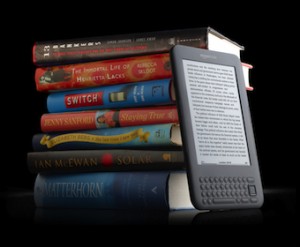 The Amazon Kindle has been a hit for pleasure readers. Although Amazon has worked hard to target students in pilot programs and textbook publisher agreements, its flagship E-reader has failed to gain acceptance on college campuses. A number of problems make the Kindle a poor match for college students.
1. No Student Pricing for Subscriptions
One benefit of forking over thousands of dollars in tuition and fees for a college education is student pricing for newspapers, journals and magazines. The Wall Street Journal allows students to subscribe at significant fraction of the regular price, for example. Unfortunately, the Kindle edition doesn’t qualify for this special pricing. Kindle editions often lack archive and online access as well.
2. Kindle Textbooks Are Too Expensive
Kindle textbooks are cheaper than the new versions but typically cost more than used editions. This wouldn’t be so much of an issue if you could resell a Kindle textbook, but Amazon (probably at the behest of publishers) does not allow this. Buying a used textbook and then reselling it at the end of the semester is a much better value. Add the cost of the Kindle into the mix and Kindle textbooks look like an even worse deal. Amazon needs to either discount its textbooks to reflect this, or set up an exchange where students can sell their digital property.
3. University Wi-Fi Not Always Supported
Many universities use 802.1x authentication for wireless access because it provides better security. According to the Kindle product page, the device is incompatible with these types of networks. Unless you buy the more expensive 3G model, you’ll have to venture off-campus to download books and get the latest edition of The Economist. This also means you can’t use the Kindle’s built-in Web browser on your campus’s authenticated Wi-Fi
4. Who Likes Reading Biology on a Small Screen, Anyway?
Textbooks are big for a reason. They contain large diagrams, graphs and tables that summarize content and enhance learning. It’s annoying enough when a textbook references a figure on another page, but good luck ever viewing a full-size diagram and text at the same time on a Kindle. Even the 9.7-inch screen on the Kindle DX can’t beat the two-page view of a print textbook. Not to mention you must view the entire book in black and white and can’t write notes (you can type annotations). Unless you’re an English major reading novels, you’re unlikely to find the Kindle format convenient for academic reading.
Amazon’s Kindle is an innovative device and there is no reason why it won’t become more popular over time. Rival products such as the Nook have similar failings. Even if Amazon fixes the textbook pricing, student subscription and Wi-Fi issues, the E-reader format does not lend itself well to learning. Amazon fortunately currently lets you read any Kindle book on a PC or Mac through a downloadable application. This alleviates many of the physical limitations. Maybe Amazon should focus more on eBooks for laptops?
Daniel Foster is a freelance writer and published photographer studying International Trade & Finance at Louisiana State University. His blog, PC Fastlane, covers a variety of technology topics. He owns a Kindle 3 and most recently compiled a list of the top Kindle cases.

I will admit that it is a pretty cool gadget, but it is not the best thing for a student. I am old fashioned in the sense that I would prefer a good old fashioned textbook, pen, and paper.
I am not sure about this, but there could be some possible risks for people reading Kindles for hours and hours on end. A textbook may be better for their eyes, though I am not sure about that. It would be worth looking into.